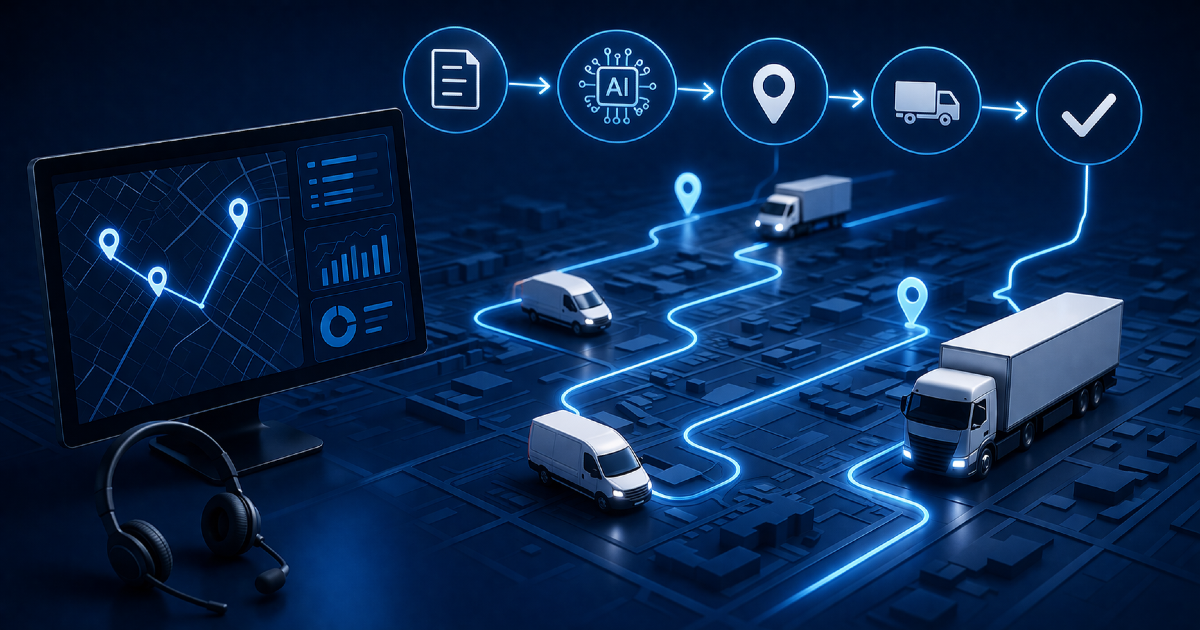
Dispatch without chaos: AI workflows for transport teams
Dispatch teams juggle load assignments, driver updates, and customer calls all day. When information is scattered across emails, TMS notes, and phone calls, the best dispatchers still spend hours on manual coordination. AI automation brings those signals into one place and helps teams act faster.
Build a single dispatch queue
Start by consolidating signals from:
- TMS updates and lane data
- Carrier emails and PDFs
- Driver status pings and GPS feeds
- Customer support notes
AI can normalize these inputs into one dispatch queue so teams see what needs attention first.
Automate load assignment suggestions
AI doesn’t replace dispatchers — it gives them a faster starting point. We combine rules (capacity, lane, hours) with AI suggestions so teams can approve or adjust assignments in seconds.
Proactive ETA and exception alerts
When ETAs slip or a load goes off-plan, AI can trigger the next step:
- Draft customer updates
- Create internal tasks for ops
- Escalate high-risk exceptions
This reduces back-and-forth and keeps service levels predictable.
Keep humans in control
Every automated step should have confidence levels, approvals, and audit trails. Dispatch is a high-impact function — control and visibility matter.
Measure the impact
The first pilot should track:
- On-time performance changes
- Manual touches per load
- Exception resolution time
If dispatch is still running on email and phone calls, we can help design a workflow that gives your team real-time control.