When companies think about automation, they often first think of an AI chatbot or a single tool that will solve everything.
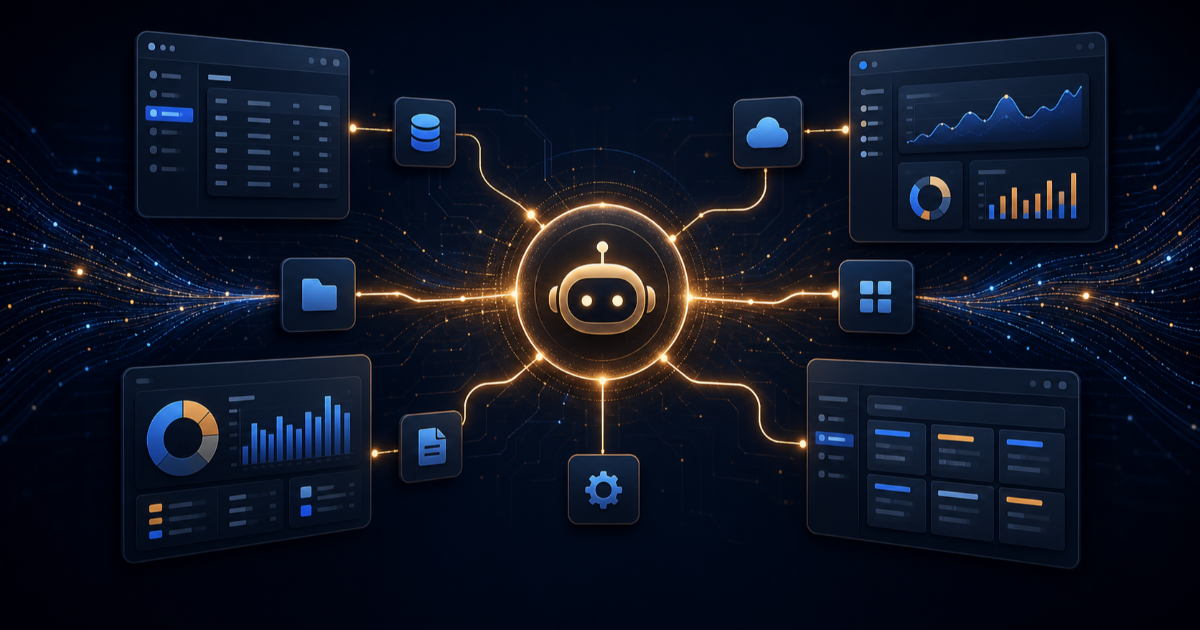
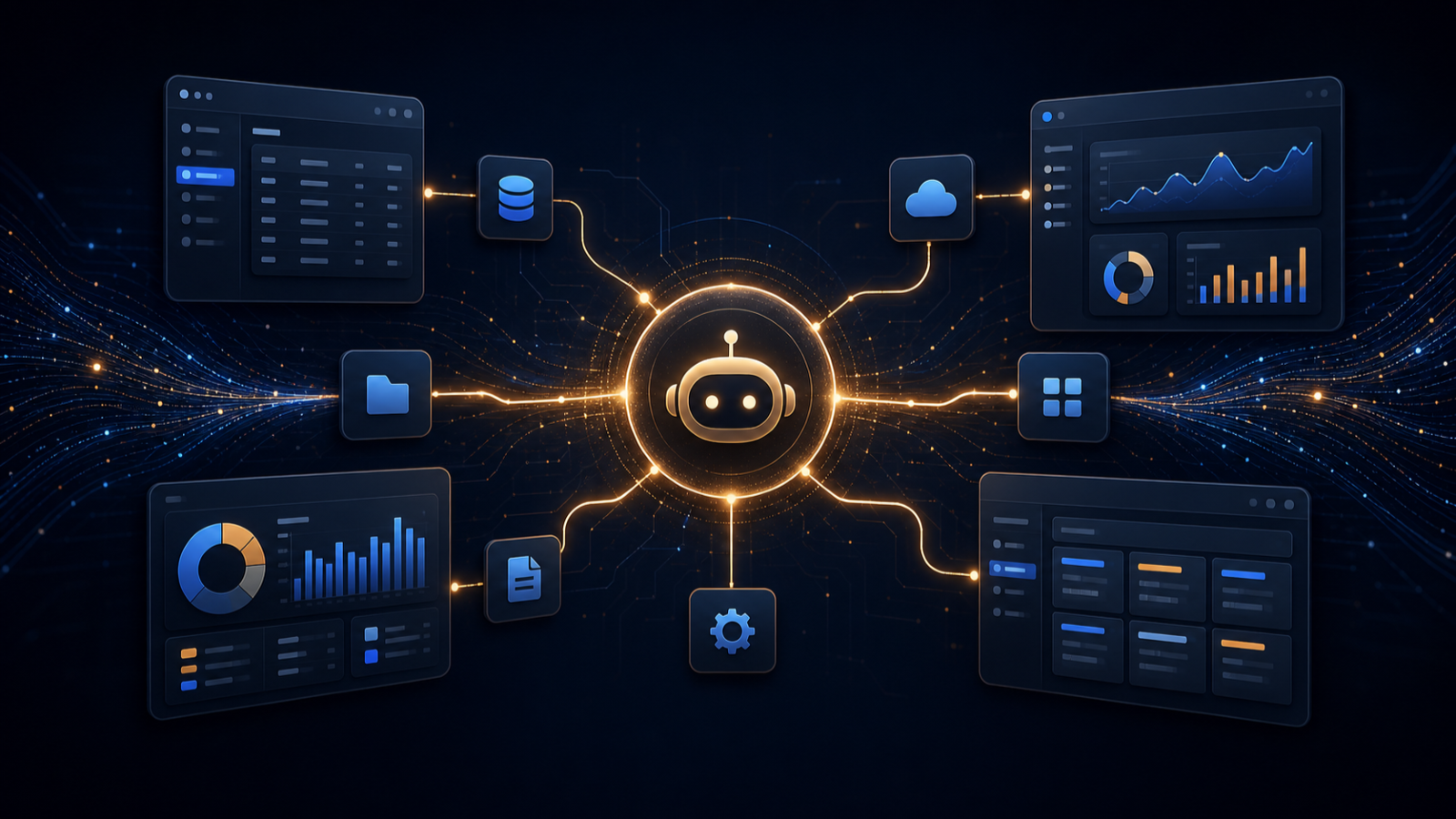
In practice, the real value of automation is not in one tool, but in connecting the processes, software, and data that are already used in daily work.
A company may already use email, Excel, a CRM, an ERP, accounting software, internal spreadsheets, forms, a calendar, WhatsApp, or another system. The problem starts when these tools do not work together.
Employees then have to manually transfer data, check statuses, send the same messages, create reports, and track what has been done.
What does it mean to connect multiple programs?
Connecting programs means that data no longer has to be manually copied from one system to another.
For example:
- an inquiry that arrives by email can automatically become a task
- an order from a form can be entered into the system
- a status from an internal program can be sent to the client
- data from Excel can be used for reports
- invoices and deadlines can trigger reminders
- the team can receive a notification when something is late
The goal is to reduce manual work and make information available in one place.
Where does the AI assistant fit in?
An AI assistant is not just a chatbot that answers questions.
When it is connected to business data and company rules, it can help employees find information faster and complete specific tasks.
For example, an employee can ask:
- “Which orders are late?”
- “Which clients are waiting for a response?”
- “Prepare a short report for this week.”
- “Create a task for the service team.”
- “Find all open requests for this client.”
The AI assistant does not have to respond only with text. It can read data, find relevant information, prepare a response, or trigger a task in the system.
Is a new program always needed?
Not always.
In many cases, the best first step is to connect the tools the company already uses.
If existing programs contain the required data and can be integrated, automation can be built around them.
But if the process has been running for a long time through disconnected Excel files, emails, and manual agreements, it is often better to build a new internal system, admin panel, or business application.
Such a system can bring together:
- clients
- inquiries
- tasks
- work orders
- documents
- deadlines
- receivables
- reports
- an AI assistant
What does implementation look like?
The first step is to analyze the existing process.
We look at where the most manual work appears, where data is repeated, where mistakes happen, and what takes the most time from employees.
After that, the best solution is defined.
Sometimes it is enough to connect email, spreadsheets, and existing software.
Sometimes automation needs to be added to a specific part of the process.
Sometimes the best option is to build a new internal system that becomes the central place for work.
The AI assistant is then added as an additional layer that makes it easier to use the system, search data, and trigger tasks.
Practical example
Imagine a company that receives requests through email, tracks records in Excel, sends tasks through messages, and checks statuses manually.
That process can be automated so that:
- the email request automatically enters the system
- the system identifies the client and request type
- an internal task or work order is created
- the responsible person receives a notification
- the deadline is recorded automatically
- the client can receive a status update or confirmation
- the AI assistant can answer what is open, what is late, and what needs to be done today
The result is less manual work, better organization, and a clearer overview of the business.
Automation should solve a concrete problem
The best automation is not the one that uses the newest technology, but the one that solves a real business problem.
If a team loses time every day on data entry, searching for information, repeating the same replies, or manually tracking tasks, there is room for automation.
AI, integrations, and internal systems make the most sense when they work together to help a company operate faster, more clearly, and with fewer mistakes.
Conclusion
Business automation is not only about introducing AI tools.
Real value appears when existing software, data, processes, and people are connected into one functional system.
Sometimes it is enough to connect the tools you already use.
Sometimes a new internal system is needed.
And sometimes an AI assistant becomes the simplest way for employees to use all that data and those processes through one conversation.
Want to find out which part of your business can be automated? Contact us for a short process analysis.